
How Shrink Fit Tooling Works
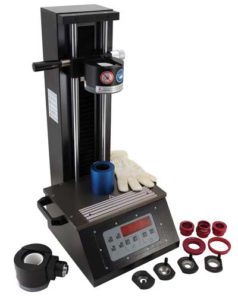
Shrink fit tooling is a common choice for high-speed machining, where runout and balance decide part quality and tool life. A shrink fit holder grips a cutting tool through a thermal interference fit. There are no collets, no nuts, and no moving clamp parts. Some machinists argue that a precision collet system is the better all-around option, and for general work it often is. For high-accuracy, high-RPM finishing, a properly sized shrink fit holder still gives you the lowest runout and the most repeatable balance of the common holder types. The trade publication MoldMaking Technology covers the trade-off in detail.
The appeal is simple. Tight concentricity, strong even grip on the shank, and a slim nose that reaches into deep pockets. Those traits help hold size, improve surface finish, and protect both the tool and the spindle. This article covers how the heat-shrink process works, the heating systems used, and how shrink fit compares to the other holders you already run.
The Heat-Shrink Process
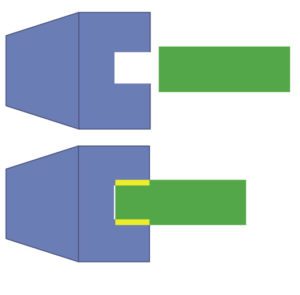
Shrink fit tooling clamps a cutting tool by heating the holder so its bore expands, dropping the tool in, then letting it cool so the bore contracts onto the shank. The bore is ground a few microns smaller than the tool shank, so at room temperature the two will not slide together. That deliberate interference is what creates the grip.
The cycle runs like this. The holder nose is heated, usually by an induction coil, until the bore grows enough to accept the shank. The cutting tool is seated to depth in a few seconds while the bore is open. Cooling then begins, the bore shrinks back, and the holder closes onto the shank with high, uniform clamping pressure around the full circumference. The result is a tight, balanced joint where the tool and holder behave like a single piece. To change the tool, you heat the nose again, the bore opens, and the tool lifts straight out.
That short cycle is why shrink fit is popular in production. Tool changes take seconds, the holder seals around the shank so chips and coolant stay out of the joint, and the slim nose clears fixtures a bulky chuck would hit.
Heating Systems for Shrink Fit Tooling
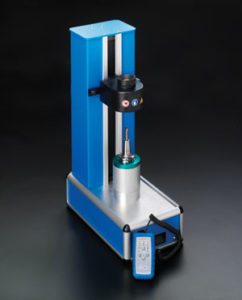
Three heating methods are used to expand the bore: induction, hot air, and open flame. Induction is the standard on the shop floor today. A high-frequency current runs through a coil, the holder nose sits inside it, and eddy currents heat just the nose in a few seconds. Because the heat is fast and localized, the rest of the holder stays cool and dimensions stay stable. Many units pair the coil with a temperature sensor or a preset cycle so the operator does not overheat the holder.
Hot air and open flame heat the holder more slowly and over a wider area. They cost less than an induction unit, but the slower, broader heating makes temperature harder to control and raises the risk of overheating the holder over time. For shops running shrink fit at any real volume, induction is the method that protects the holders. After heating, the joint is cooled with forced air or a liquid-cooled collar.
Have surplus or used shrink fit holders, collet chucks, or carbide end mills sitting in a tool crib? THE buys tooling lots outright.
Shrink Fit vs Collet, Hydraulic, and End-Mill Chucks
No single holder wins every job. The right pick depends on RPM, the operation, and how often you swap tools. The table below compares shrink fit against the three other holders most shops keep on the rack. Treat the runout figures as typical, since real numbers vary by holder grade and condition.
| Shrink fit | Collet (ER) chuck | Hydraulic chuck | Milling / end-mill chuck | |
|---|---|---|---|---|
| Typical runout (TIR) | Very low, around 3 microns (0.0001 in) at 3x diameter | Higher and more variable, depends on collet and nut | Low, similar to shrink fit on a good unit | Moderate, set-screw side load adds error |
| Balance / high RPM | Excellent, no moving parts, best for high-speed work | Good, but the nut and collet limit top-end balance | Very good, sealed and symmetric | Fair, heavier body and set screws |
| Gripping torque | High, full 360 degree contact on the shank | Moderate, depends on nut torque and collet fit | Moderate, good for finishing, lighter than shrink fit on heavy roughing | High on the flat, strong for heavy roughing |
| Tool change | Heat the nose at an induction unit, seconds per change | Loosen the nut and swap the collet, at the machine | Turn the actuation screw, at the machine | Loosen the set screw, at the machine |
| Best use | High-speed finishing, deep pockets, tight tolerance | General purpose, wide shank range, low cost per holder | Finishing and reaming where vibration damping helps | Heavy roughing with Weldon-flat end mills |
Shrink fit and hydraulic holders both run very low runout and balance well at high RPM. The end-mill (Weldon) chuck holds the most aggressive roughing cuts thanks to the set-screw flat, but that side load adds runout. A collet toolholder, like an ER chuck, covers the widest range of shank sizes at the lowest cost per holder, which is why most shops keep a drawer of them even after adding shrink fit. If you are clearing out older collet chucks and surplus carbide as you standardize, THE will buy the carbide tooling and inserts along with the holders.
Why Shops Run Shrink Fit
The case for shrink fit comes down to a few measurable traits.
Concentricity. A quality shrink fit holder typically holds runout at or below about 3 microns (0.0001 in) at three times the tool diameter. With the tool running that true, the cutting load spreads evenly across the edges instead of loading one flute, which holds size and improves finish.
Balance. With no collet, nut, or set screw, the holder is symmetric by design, so balance is repeatable from one tool change to the next. That matters most at high spindle speeds, where an out-of-balance assembly vibrates, wears the spindle bearings, and leaves chatter on the part. High-grade shrink fit holders come in balanced designs rated for very high RPM.
Rigidity and grip. The bore grips the full circumference of the shank, so the tool resists pullout and side deflection during roughing and finishing. That steady grip cuts chatter and reduces scrapped parts.
Tool life. Lower runout and a balanced, rigid joint mean each flute carries an even share of the cut. Spread the load evenly and edges wear more slowly, so a shrink fit setup can extend tool life on tight-tolerance, high-speed jobs compared with a worn or high-runout holder. The gain depends on the job, the tool, and your speeds and feeds, it is not a fixed number. Edges do wear out eventually, and the spent carbide is worth money rather than a scrap bin, so you can sell scrap carbide by the lot.
The trade-offs are real too. Each shank diameter needs its own dedicated holder, so the tooling spend is higher than a collet system that swaps collets in one body, and you need a heating unit on the floor. For shops doing high-speed finishing every day, the accuracy and tool-change speed usually justify the cost. Shops that swap shank sizes constantly tend to keep collet chucks for that flexibility.
Frequently Asked Questions
How much runout does a shrink fit holder have?
A quality shrink fit holder typically holds total indicator runout at or below about 3 microns, which is 0.0001 inch, measured at three times the cutting tool diameter. Actual runout depends on the grade and condition of the holder, the tolerance of the tool shank, and how clean the bore and shank are kept. Shrink fit and hydraulic holders sit at the low end of the runout range, while collet chucks and set-screw end mill chucks tend to run higher.
What heating systems are used for shrink fit tooling?
Three methods are used to expand the bore: induction, hot air, and open flame. Induction is the standard today. A high-frequency current passes through a coil around the holder nose and eddy currents heat just the nose in a few seconds, which keeps the rest of the holder cool and dimensionally stable. Hot air and open flame heat more slowly over a wider area and cost less, but temperature is harder to control and the risk of overheating the holder is higher. After heating, the joint is cooled with forced air or a liquid-cooled collar.
How many heat and shrink cycles can a holder take?
A shrink fit holder is rated for many thousands of heat and shrink cycles, often quoted in the range of roughly 20,000 to 50,000 cycles as a general figure rather than a guaranteed life. The actual number depends on the holder material, how hot it gets each cycle, and how well the heating equipment controls temperature. Overheating with an open flame or an uncontrolled cycle shortens that life, while a properly set induction unit with cooling helps the holder reach the high end of the range.
Shrink fit vs collet chuck, which is better?
It depends on the work. Shrink fit gives lower runout and more repeatable balance, which makes it the stronger choice for high-speed finishing, deep pockets, and tight tolerances. A collet chuck, such as an ER chuck, covers a wide range of shank sizes from one body at a much lower cost per holder, which suits general purpose work and shops that change shank sizes often. Many shops run both: shrink fit for the precision high-RPM jobs and collet chucks for everyday flexibility.
What tool shank works with a shrink fit holder?
Shrink fit holders are designed for solid carbide or HSS tools with a ground, smooth cylindrical shank held to the bore tolerance the holder calls for, commonly an h6 shank. The shank diameter must match the holder bore, since each bore size grips one nominal diameter. Avoid shanks with a Weldon flat or a whistle-notch in a plain shrink fit bore, because those features break the even contact the fit relies on. Keep the shank and bore clean so the tool seats true.
Upgrading to shrink fit and retiring older holders? Turn surplus CAT-40, BT, HSK, and collet holders into cash instead of leaving them in a drawer.