 A tool holder is the part that connects the cutting tool to the machine spindle. Get the holder right and the cutter runs concentric, rigid, and repeatable. Get it wrong and you chase runout, chatter, and scrapped parts all shift. Holders are not interchangeable across machines, because the mounting interface has to match the spindle exactly. Those interfaces run from modern HSK tool holders and VDI turret mounts to the dated R8 collet style still found on old knee mills.
This guide walks the common taper standards a machine shop runs into, breaks down the parts of a holder, and shows where each interface is used so you can match a holder to a spindle with confidence. Because a CNC tool holder only runs true when its taper matches the spindle exactly, the same knowledge tells you whether a used holder will drop into your machine and what it is worth on the resale market.
The Three Parts of a Tool Holder
Almost every machining-center holder is built from three sections that each do a specific job:
- Taper: The cone-shaped end that seats into the spindle. The taper sets concentricity and carries the cutting load, so its angle and tolerance have to match the spindle bore precisely.
- Flange (V-flange): The grooved collar the automatic tool changer (ATC) grips when it swaps tools in and out of the spindle. The gripper arm catches this groove.
- Collet pocket / gauge end: The business end that clamps the cutter, whether through a collet nut, an end mill holder set screw, a shrink-fit bore, or a hydraulic chuck.
One distinction that trips people up: static tooling is not powered, while live (driven) tooling is powered. On a CNC lathe or mill-turn machine, a static holder simply clamps a stationary tool such as a turning insert. A live holder, by contrast, takes drive from the machine and spins the tool itself, which is what lets a lathe drill cross-holes or mill flats without a second setup. Live tooling has its own gear or coupling that picks up rotation from the turret.
Tool Holder Types

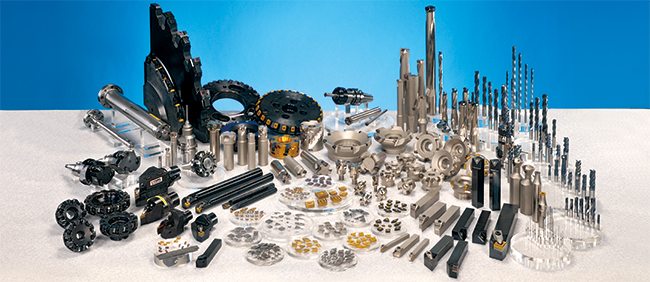
Beyond the spindle interface, holders are classified by the kind of cutter they grip. A CNC milling tool holder grips rotating cutters such as end mills, face mills, and drills, while a CNC lathe tool holder clamps a stationary turning insert or, as live tooling, drives its own rotating cutter. These are the styles you will see listed in tooling catalogs and crib inventories:
- Machine arbors: Hold and drive face mills, slitting saws, and shell mills on a central spindle.
- Side cutter holders: Locate and clamp side and face milling cutters.
- Saw blade holders: Mount slitting saws and slot cutters squarely on the arbor.
- Boring heads: Hold boring bars and let you dial in precise hole diameters.
- Tapping chucks: Hold taps with tension and compression float so threads cut clean.
- Blank adapters: Unbored blanks you machine to suit a non-standard shank.
- End mill holders: Clamp the flat on a Weldon-shank end mill with a set screw.
- OD and ID turning holders: Carry outer-diameter and inner-diameter inserts on a lathe.
- Collet chucks: Accept ER or similar collets to grip a range of cutter shank sizes.
- Milling and drilling chucks: Hold drills and cutters for general milling operations.
Have surplus or used tool holders sitting in a tool crib? THE buys tooling lots outright. The worn carbide alongside them still has value too, so you can sell your scrap carbide in the same lot.
Common Taper Standards Compared
 When you buy tool holders, the first thing to nail down is the mounting style your spindle takes. The wrong taper will not seat, and even close-but-not-identical standards like CAT and BT are not cross-compatible. Here is how the common interfaces stack up.
The R8 mount was developed by Bridgeport in the 1960s for manual knee mills. It is a self-releasing collet-style taper pulled in by a drawbar from the top of the head. R8 is still around on older manual machines, but you will not find it on modern CNC spindles.
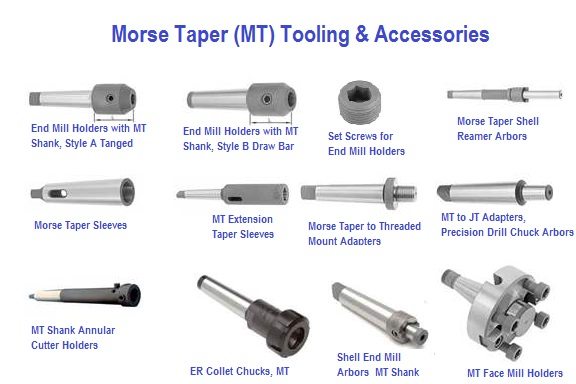
The Morse taper (MT) is a self-holding taper used mainly for drills, reamers, and lathe centers. It comes in sizes MT0 through MT7, with each number stepping up in diameter. Because the taper angle is shallow, the tool grips by friction alone and stays put until knocked loose, which is why it suits drilling rather than high-speed milling.
National Machine Tool Builders Association set the NMTB standard, a steep V-flange taper of 3.5 inches per foot used across older milling machines. NMTB seats by friction and is retained with a drawbar threaded into the back of the holder, so tool changes are slower than on the quick-change studs that replaced it.
The CAT taper, also called V-flange, is the steep 3.5-inch-per-foot taper that dominates North American machining centers. It carries a retention knob (pull stud) the ATC drawbar grabs, and it is sized by number, CAT-30, CAT-40, CAT-50, and the heavy CAT-60. The taper itself shares geometry with NMTB but adds the V-flange groove and pull stud for automatic tool changing.
The BT taper is the metric counterpart common on Japanese and many European machines. It uses the same 3.5-inch-per-foot taper angle as CAT but is fully symmetric about the spindle axis for better balance at speed, and it uses metric retention knobs and flange dimensions. A CAT-40 and a BT-40 will physically fit a 40-taper spindle pocket, but the pull studs and flange details differ, so you must match the holder to the machine.
Hollow Shank Taper (HSK) is the modern high-speed standard defined in DIN 69893. Instead of a long solid cone, HSK uses a short hollow shank that contacts the spindle on both the taper and the face at once. That dual contact stays rigid at high rpm where a solid taper can pull away from the spindle face, which is why HSK is standard on high-speed machining and many automated cells. It comes in forms such as HSK-A and HSK-E for different drive and clamping needs.
| Standard | What it is | Where it is used |
|---|---|---|
| CAT (V-flange) | Steep 3.5 in/ft taper with V-flange groove and pull stud, sized CAT-30 to CAT-60. | The dominant interface on North American CNC machining centers. |
| BT | Same 3.5 in/ft taper angle as CAT but symmetric and fully metric, with metric pull studs. | Japanese and many European mills; favored where spindle balance matters. |
| HSK | Short hollow taper with simultaneous taper-and-face contact, per DIN 69893. | High-speed machining centers, mill-turn, and automated production cells. |
| NMTB | Steep 3.5 in/ft V-flange taper retained by a threaded drawbar, no quick-change stud. | Older manual and early CNC milling machines. |
| Morse (MT) | Shallow self-holding friction taper, sizes MT0 to MT7. | Drill presses, lathe tailstocks, and tailstock-fed drilling and reaming. |
| R8 | Self-releasing collet-style taper drawn in by a top drawbar. | Bridgeport-style manual knee mills. |
You can read more on the dimensions and sizing for specific standards on our dedicated pages for CAT tool holders, BT tool holders, HSK tool holders, and NMTB tool holders.
Features and Applications
Within any taper family, holders differ by how they grip the cutter and how they manage heat and chips. Many production holders route coolant straight through the body so it exits at the cutting edge, which clears chips and extends insert life on deep holes and hard materials. Others are fed externally. Shrink-fit holders heat the bore to grip a carbide shank with near-zero runout, hydraulic chucks clamp with pressurized fluid for vibration damping, and collet chucks trade a little rigidity for the flexibility to hold many shank sizes.
The right choice comes down to the job. A roughing pass wants a rigid end mill holder or shrink-fit; a finishing pass at high rpm wants the balance and concentricity of HSK or a well-trued shrink-fit holder; tapping wants a floating tapping chuck. Match the holder to the operation and the spindle, and the cut takes care of itself. If you are sorting through a crib full of mixed brands, our pages on selling carbide tooling and inserts and Kennametal tool holders cover the makes THE buys most often.
Buying and Selling Used Tool Holders
Tool holders are built to outlast the machines they were bought for. When a shop retires a spindle, switches taper standards, or clears out a crib, the CAT, BT, and HSK holders inside still have years of accurate service left, which is why a used tool holder market exists at all. The Tool Holder Exchange buys tooling lots outright and resells inspected holders, so a CAT-40 collet chuck that no longer fits one shop becomes stock another shop can put to work the same week. If you are clearing surplus, start with selling your tool holders or selling carbide tooling and inserts; if you are sourcing, our carbide tooling and tool holder brand pages show the makes THE handles most.
Frequently Asked Questions
What is the difference between a CAT and a BT tool holder?
CAT and BT holders share the same steep 3.5 inch per foot taper angle, so a CAT-40 and a BT-40 use the same taper size. The differences are in the details: BT holders are symmetric about the spindle axis for better balance at high speed and use metric retention knobs and flange dimensions, while CAT holders use inch-based pull studs and flange specs. They are not interchangeable, so the holder must match what the machine spindle expects.
Is live tooling powered or not?
Live tooling, also called driven tooling, is powered. The machine drives it through a gear or coupling so the tool itself rotates, which lets a CNC lathe drill cross-holes or mill flats. Static tooling is not powered; it simply clamps a stationary tool such as a turning insert while the workpiece spins.
What does HSK stand for and why is it used?
HSK stands for Hollow Shank Taper, a standard defined in DIN 69893. It uses a short hollow shank that contacts the spindle on both the taper and the face at the same time. That dual contact keeps the tool rigid at high spindle speeds, where a long solid taper can pull away from the spindle face. HSK is common on high-speed machining centers and automated production cells.
What is a Morse taper used for?
A Morse taper is a self-holding friction taper used mainly for drills, reamers, and lathe centers. It comes in sizes MT0 through MT7. Because the taper angle is shallow, the tool grips by friction and stays seated until it is knocked loose, which makes it well suited to drilling and tailstock work rather than high-speed milling.
How do I know which tool holder fits my machine?
Match the holder to the spindle interface, which is fixed by the machine. Identify the spindle taper standard and size, such as CAT-40, BT-40, or HSK-A63, then confirm the retention knob or pull stud style your tool changer requires. Tapers from different standards are not cross-compatible even when the size number is the same, so verify both the taper family and the knob spec before buying.
What is a CNC tool holder?
A CNC tool holder is the adapter that locks a cutting tool into a CNC machine’s spindle or turret. On a machining center it seats through a steep taper such as CAT, BT, or HSK and is gripped by the automatic tool changer; on a CNC lathe it clamps a turning insert or, as live tooling, drives a rotating cutter. The holder sets the concentricity and rigidity of the cut, so matching its taper and gauge to the machine matters as much as the cutter itself.
Where can I buy or sell used tool holders?
The Tool Holder Exchange buys and sells used tool holders and full tooling lots across CAT, BT, HSK, NMTB, and specialty styles. Used holders hold their accuracy well, so a retired crib is often worth real money and a practical place to source holders below new-list prices. List surplus on our sell pages, or tell us the taper and size you run and we will say what is in stock.